
Why Newborns Become Jaundiced
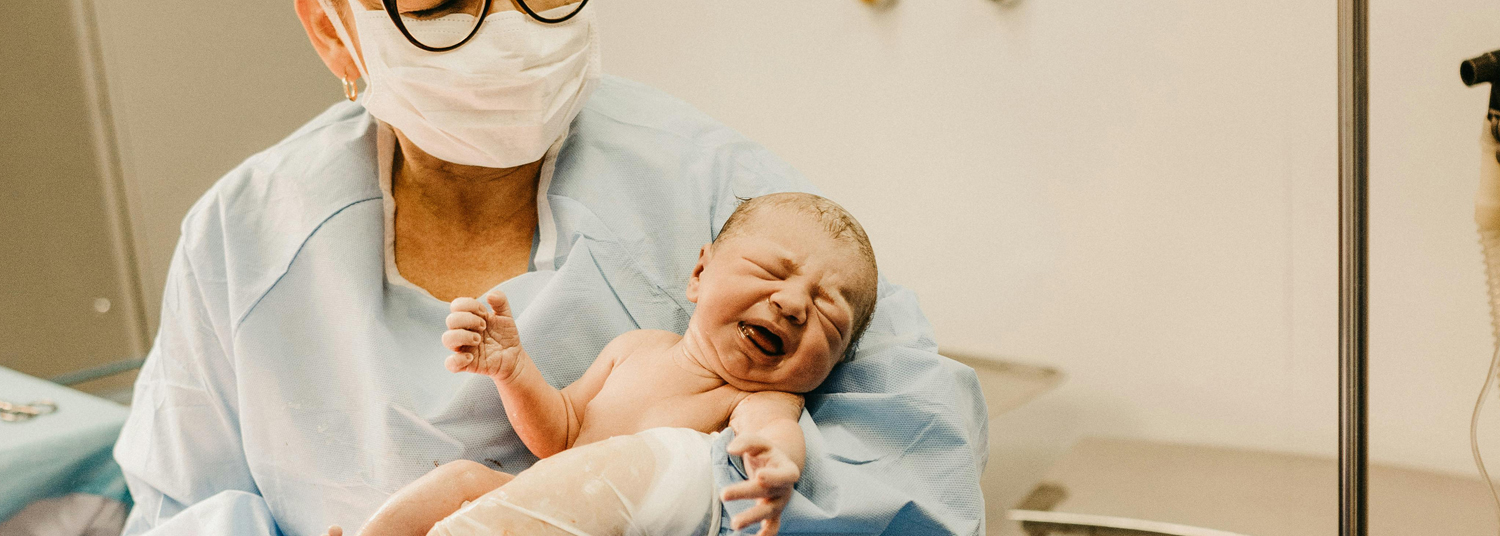
All newborns develop jaundice in the first couple weeks of life.
This is known as benign physiologic jaundice of the newborn. There are MANY other causes of jaundice that can occur in the newborn period but they are well beyond the scope of this article. We will only discuss the normal jaundice of the newborn.
Jaundice is the yellowish discoloration of the skin that occurs from a pigment known as bilirubin.
This pigment is the byproduct of old red blood cells. Normally the bilirubin goes to the liver where it is processed for elimination and is excreted through the intestinal tract in the stool, or through the kidneys in the urine. It is the bilirubin that makes the stool brown and urine yellow.
In the newborn, jaundice starts in the face and then spreads to the abdomen, extremities and finally the hands and feet depending on the level of the bilirubin.
It can easily be measured with a blood test. When a clinician first detects jaundice of the face the bilirubin is usually above 5 mg/dl. When the eyes become yellow the bilirubin is over 8. Spreading to the hands and feet it is probably in the teens. This needs to be monitored closely as the goal is not to let the bilirubin get above 20.
While the fetus is in the uterus the circulation bypasses the fetus’s vital organs, and the mother’s organs essentially do all of the work.
Once the umbilical cord is cut the baby’s normal circulation is established. All of its organs now take over the vital responsibilities. When this happens the baby’s liver now must process all of the bilirubin on its own. It becomes a bit overwhelmed. As it cannot process it fast enough the bilirubin spills back into the circulation, thus causing jaundice. It takes at least a few days for the liver to catch up with the excretion of the bilirubin. Normal jaundice of the newborn peaks in the first week of life and then drops to an acceptable level. It is important for the pediatrician to monitor the bilirubin closely.
The best stimulus to help excrete the bilirubin is to insure that the newborn is drinking well and gaining appropriate weight.
Eating well gets the gut working, thus increasing the number of stools and helping the liver proceed to excrete the bilirubin. It will also increase the urine output allowing the kidneys to excrete the bilirubin as well. Stools are dark meconium for a few days, then transitioning to the normal mustardy-yellow stool of a breast or bottle fed newborn. This tells when the bilirubin should be coming down.
If the bilirubin rises rapidly and approaches the concerning level of 20 the pediatrician may start phototherapy to drive the level down quickly.
Phototherapy uses a special blue-green light that changes the bilirubin molecule into a more water-soluble form. This enhances the excretion through the stool and urine. A newborn getting phototherapy is usually in a bassinet wearing only eye patches. This is to allow as much skin as possible to be exposed to the light since it works on the bilirubin through the skin. Usually this is done in the hospital but there are some units that can be used at home. Parents often ask about putting their newborn in the sunlight as a means of getting rid of the jaundice. However, this is not very practical since the newborn is fully dressed and only the face may be exposed to the sunlight.
Another concern when discussing the normal jaundice of the newborn is when there may be an ABO-incompatibility.
This has to do with both mom and baby’s blood types. A person who is blood type O has the potential to carry anti-A or anti-B antibodies. If mom’s blood type is O and the baby’s blood type is A or B, and mom has the antibodies against A or B, this may cause the breakdown of red blood cells and lead to increased jaundice. When an expectant mom is admitted to the hospital to deliver her baby blood types are checked. If she is type O the antibodies can be measured. If there is such a set up the pediatrician knows to monitor the bilirubin very closely.
The bilirubin can be measured through a blood test which requires a blood draw from the baby.
There is a way to measure the bilirubin by a trans-cutaneous monitor which is non-invasive and fairly reliable. This is similar to a temporal scanner used to measure the temperature. It is quick and does not require a blood draw. It is a nice way to track the bilirubin until it has peaked and is on its way down.